Verify Seller, Product and Purchase Route Before You Trust an Oral-Health Supplement Listing
Direct answer: Authenticity is about whether the product and seller route you are using match the intended commercial offering. Check the destination, product name, formula, package details, transaction records and support information before paying. A familiar bottle image or marketplace listing is not enough by itself, and authenticity does not prove clinical efficacy.
This site may earn a commission from qualifying purchases. Commercial relationships do not change the evidence standard used in the buyer guidance.
Dentolyn Oral-Health Supplement
Review the product profile after the page-specific problem and evidence question are clear.
Dentolyn
Oral-health supplement currently reviewed for formula, evidence, safety, legitimacy and buyer-protection fit across this site.
What should you verify before trusting a supplement listing or checkout?
Destination
Confirm that the link resolves to the expected seller or merchant destination.
Product identity
Check the product name, packaging and formula against the current reviewed information.
Transaction details
Review the charge, package, shipping and payment processor before paying.
Support route
Make sure order support and refund contacts are visible and coherent.
Record keeping
Save checkout screenshots, receipts, confirmations and seller correspondence.
Evidence separation
Remember that authenticity tells you what you are buying, not whether it clinically works.
Resolve trust and purchase-risk questions before conversion
Dentolyn is evaluated as a commercial oral-health supplement. Seller identity, authenticity, formula, safety, reviews and refund protection can reduce uncertainty, but none of these factors substitute for clinical evidence.
Reasonable next step
Move toward package comparison only after the product, seller route and buyer-protection terms are clear.
Evidence limit
Authenticity, legitimacy, guarantee terms and transaction records do not establish that the product produces a health outcome.
Only compare packages after the trust checks are complete
Use Domain B to resolve authenticity and buyer concerns. Then move to Domain A for the current commercial decision layer.
Authenticity answers “is this the intended product and seller route?”
Authenticity is narrower than legitimacy and separate from efficacy. A commercially real product may still appear through unofficial, misleading or inconsistent seller routes. The useful buyer task is to confirm that the product identity, seller destination and transaction details align with the intended purchase channel before money changes hands.
Start with the destination rather than the branding
A polished page, familiar logo or matching bottle image can be copied. The stronger check is where the purchase link actually leads, what merchant or payment processor appears at checkout, and whether the transaction details match the product being promoted. Unexpected redirects or inconsistent names deserve further review.
Compare the formula, not only the front label
The currently reviewed Dentolyn formula lists vitamin C, vitamin B6, iodine, xylitol, chlorella powder, clinoptilolite zeolite powder and magnesium stearate. If a listing describes a materially different formula, adds named probiotic strains that are not shown in the reviewed formula or presents a different product identity, the discrepancy should be resolved before purchase.
Merchant artwork can contain claims that need separate verification
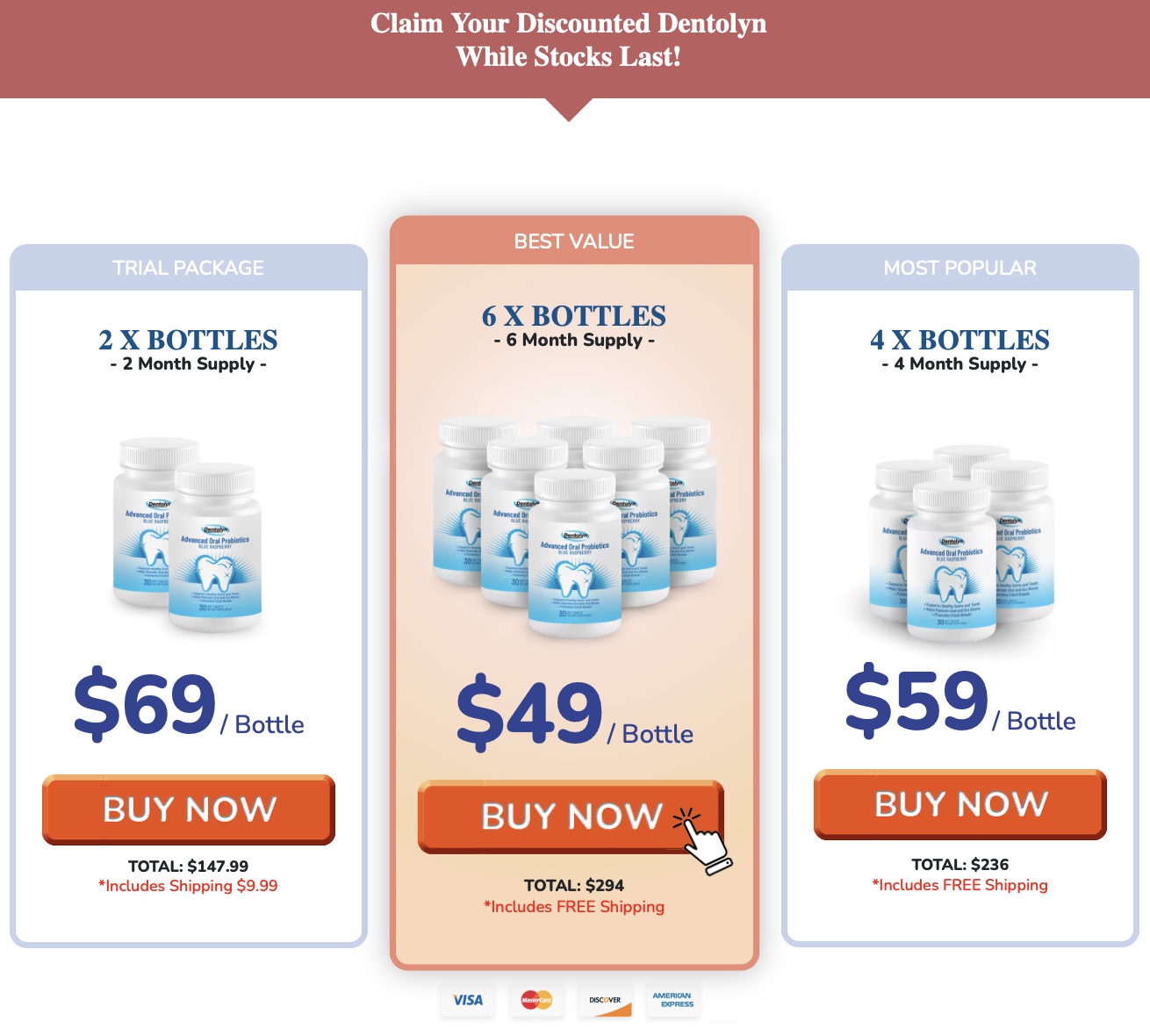
Marketing artwork may use category language, package claims or urgency statements. Those statements should not be treated as independent proof. In particular, artwork that uses probiotic wording does not override a formula that does not establish named live strains. Authenticity checking therefore includes comparing marketing language with the factual product information available.
Package and price consistency can help reveal mismatches
Commercial terms change, so price differences are not automatically suspicious. However, a listing that presents a completely different package structure, product quantity or checkout description from the intended offer deserves scrutiny. The buyer should verify current terms at the live merchant destination rather than rely on screenshots copied from older pages.
Transaction records are part of authenticity evidence
Save the order confirmation, seller or payment-processor name, package selected, final amount charged and support details. These records provide a concrete reference if the delivered item, refund process or seller identity later becomes unclear.
Third-party listings require more verification, not less
A marketplace or reseller listing can create an additional layer between the buyer and the original product route. That does not automatically make the listing invalid, but it increases the number of details that should be checked, including seller identity, formula consistency, fulfillment responsibility and refund terms.
Do not use packaging similarity as the only authenticity test
Images can be copied, altered or reused across listings. A package that looks correct in a thumbnail is weaker evidence than a coherent seller route, matching formula information, clear transaction records and support details. The best authenticity check combines several consistent signals.
Authenticity and safety are different questions
An authentic product can still be unsuitable for a particular user. After verifying the seller and product identity, the buyer should still review the ingredient list, medications, health conditions, sensitivities and current label directions. Authenticity does not remove the need for a safety decision.
Authenticity and efficacy are also different questions
Confirming that a product is genuine does not prove that it delivers every advertised health outcome. Clinical claims still require appropriate evidence. This distinction prevents a verified purchase route from being treated as scientific validation.
What to do when something does not match
If the seller identity, formula, product name, package details or checkout information are materially inconsistent, stop and resolve the discrepancy before paying. Do not rely on urgency language to bypass verification. A cautious delay is preferable to entering payment information into a route that is not understood.
A practical authenticity checklist
| Check | What to confirm |
|---|---|
| URL/destination | The link reaches the intended seller or merchant route. |
| Product identity | Name, formula and package are consistent. |
| Checkout | Package, total charge and payment details are coherent. |
| Support | Order and refund contacts are available. |
| Records | Confirmation and transaction details are saved. |
| Claims | Authenticity is not confused with clinical proof. |
Practical conclusion
The strongest authenticity decision is based on a consistent chain from product information to seller route to checkout to transaction records. Verify that chain first, then assess safety and efficacy separately. If the route is unclear, do not let familiarity, testimonials or scarcity language substitute for verification.
Editorial standard: Authenticity and legitimacy are assessed through seller identity, purchase route, terms and transaction records. They remain separate from clinical validation.
Why authenticity checks should be repeated when the seller route changes
A prior successful purchase does not guarantee that every later listing or redirect is the same route. Affiliate links, merchant pages and third-party listings can change over time. Recheck the destination and transaction details whenever the route looks different, especially if the product description, formula, package or support information has changed. This keeps authenticity tied to the specific transaction rather than to brand familiarity.
Choose the next guide based on the remaining trust or purchase question
Check legitimacy
Before-you-buy checklist
Review formula and ingredients
Compare product fit on MenPS
Check current purchase options
Ready to move from due diligence to the commercial decision?
Proceed only after formula, safety, seller and buyer-protection questions are sufficiently resolved.
Frequently Asked Questions
How can I check whether a Dentolyn listing is authentic?
Verify the seller route, current formula, product identity, checkout details, transaction records and support information.
Does a matching bottle image prove authenticity?
No. Images can be copied, so they should not be the only verification signal.
What if a listing shows probiotic strains that are not on the reviewed formula?
Treat the discrepancy as unresolved and verify the current product information before buying.
Does an authentic product mean it is clinically proven?
No. Authenticity and clinical efficacy are separate questions.
Should I keep order records?
Yes. Save confirmations, payment details and seller correspondence.
What if the checkout looks inconsistent?
Do not proceed until the destination, product identity and transaction information are clear.