Support a Healthier Oral Microbiome With Better Daily Habits and Smarter Supplement Choices
Direct answer: A healthier oral microbiome is supported primarily by a stable oral environment: regular plaque control, consistent hygiene, sensible diet, saliva support and appropriate dental care. Supplements can be considered as an optional layer, but the evidence for a category or ingredient should not be treated as proof that every finished product produces the same microbiome effect.
This site may earn a commission from qualifying purchases. Commercial relationships do not change the evidence standard used in the buyer guidance.
Dentolyn Oral-Health Supplement
Review the product profile after the page-specific problem and evidence question are clear.
Dentolyn
Oral-health supplement currently reviewed for formula, evidence, safety, legitimacy and buyer-protection fit across this site.
What actually supports a healthier oral microbiome?
Control plaque consistently
Oral microorganisms live within biofilms, so brushing and interdental cleaning remain central to managing the environment in which microbial communities develop.
Reduce repeated dietary pressure
Frequent fermentable-carbohydrate exposure can favor acid-producing conditions relevant to tooth decay and biofilm ecology.
Protect saliva and oral comfort
Hydration and attention to persistent dry mouth matter because saliva helps shape the oral environment and daily comfort.
Avoid the bacteria-free mindset
A healthy mouth is not a sterile mouth. The goal is a stable ecosystem rather than indiscriminate elimination of microorganisms.
Use evidence at the right level
General microbiome research, ingredient evidence and finished-product evidence answer different questions.
Check supplement fit last
Dentolyn can be reviewed as an oral-health supplement after the foundation is in place, not as a substitute for it.
Use the product only after the oral-health foundation is clear
Dentolyn is evaluated here as an oral-health supplement. The reviewed formula does not establish named live probiotic strains, so the product is not independently classified as a probiotic. Ingredient relevance, general microbiome science and finished-product evidence remain separate layers.
Reasonable product role
Optional supplemental support for a user who already has a consistent oral-care routine and understands the formula and evidence limits.
What not to claim
Do not treat Dentolyn as a replacement for brushing, a proven dysbiosis treatment, a plaque remover or a finished-product probiotic without verified supporting evidence.
Resolve the health and evidence question before comparing packages
Use Domain B to understand the problem, evidence limits and product fit. Move to the conversion site only after those questions are resolved.
A healthy oral microbiome is a community, not a single organism
The oral microbiome includes bacteria, fungi, archaea and viruses living across teeth, gums, tongue and other oral surfaces. The reviewed scientific source describes this ecosystem as diverse and complex, with microorganisms existing in biofilm and contributing to oral homeostasis. That means “supporting the microbiome” should not be reduced to adding one organism or trying to remove all bacteria.
Oral homeostasis depends on the environment around the microbes
Diet, smoking, alcohol use, lifestyle, medical conditions and other factors can influence the oral microbial environment. Poor oral hygiene and plaque accumulation can also change local conditions. The practical implication is that microbiome support begins with the conditions created every day in the mouth, not with a supplement bottle.
Mechanical plaque control remains foundational
Because the oral microbiome commonly exists in biofilm, physical plaque control matters directly. Brushing and interdental cleaning help disrupt the structures in which microbial communities live. A supplement may have ingredient-level relevance to oral health, but it should not be represented as doing the mechanical work of brushing or removing established plaque unless specific evidence supports that claim.
Diet can shift the oral environment
Fermentable carbohydrates can be metabolized by acid-producing bacteria, creating conditions relevant to enamel demineralization and caries. This does not mean that one food determines the microbiome, but repeated dietary exposure can create a more favorable environment for acid production. A healthier routine therefore looks at frequency of exposure as well as the supplement decision.
Saliva is part of the oral ecosystem
Saliva contributes to lubrication, oral comfort and the chemical environment of the mouth. Persistent dry mouth can be associated with medications, health conditions or other factors. When dryness is a major problem, the cause deserves attention rather than assuming that a microbiome supplement is the primary solution.
Dysbiosis is a disruption, not a consumer diagnosis
The reviewed literature describes oral microbiome dysbiosis as an imbalance or disruption in the composition and functioning of the microbial community. It is associated with oral-health problems including caries, periodontal disease, halitosis and candidiasis. A consumer cannot reliably diagnose a specific microbiome imbalance from symptoms alone, so “dysbiosis” should not be used as a catch-all explanation for every oral complaint.
Ingredient evidence needs to stay at ingredient level
Xylitol is relevant to oral-health research and has been studied in forms such as gums and mints. The study form, exposure pattern, amount and endpoint matter. The presence of xylitol in the reviewed Dentolyn formula is therefore relevant, but it does not independently establish that Dentolyn reproduces the same microbial or plaque-related effect as every xylitol intervention studied elsewhere.
Probiotic evidence should not be transferred to Dentolyn without verified strains
Oral probiotic research can involve named live strains with defined dosing and outcomes. The currently reviewed Dentolyn formula does not establish named live probiotic strains. For that reason, this site does not independently classify Dentolyn as a probiotic or use oral-probiotic studies as finished-product proof.
Fresh breath, gum comfort and cavity prevention are separate endpoints
These outcomes can share microbial and plaque-related influences, but they are not the same claim. Halitosis may involve volatile sulfur compounds and other causes. Gum inflammation is closely related to plaque accumulation and host response. Caries involves acid-producing conditions and demineralization. A product should not be credited with all three outcomes merely because it is marketed for “oral microbiome support.”
When Dentolyn may be a reasonable fit
Dentolyn may be worth considering when the user already has a sound oral-care routine, understands the reviewed formula and wants an optional supplement layer. It is a weaker fit when the user is trying to replace brushing, manage persistent bleeding or pain, or treat a suspected dental condition without assessment.
How to evaluate a microbiome-support claim before buying
| Check | What to ask |
|---|---|
| Formula | What ingredients or strains are actually listed? |
| Evidence | Is the evidence for the ingredient, category or finished product? |
| Outcome | What specific oral-health endpoint was measured? |
| Routine fit | Does the product complement or distract from established hygiene? |
| Safety | Are there ingredient, medication or suitability questions? |
Practical conclusion
The most reliable route to a healthier oral microbiome is not a single product claim. It is a stable oral environment supported by plaque control, appropriate diet, saliva awareness, professional care when needed and careful interpretation of supplement evidence. Dentolyn can be evaluated within that framework, but it should not be used to bypass it.
Reference framework: Rajasekaran JJ et al. “Oral Microbiome: A Review of Its Impact on Oral and Systemic Health.” Microorganisms. 2024;12:1797. DOI 10.3390/microorganisms12091797.
Choose the next guide based on the problem or decision you still need to resolve
Understand oral microbiome imbalance
Build a microbiome-support routine
Review Dentolyn formula facts
Review deeper oral-health evidence
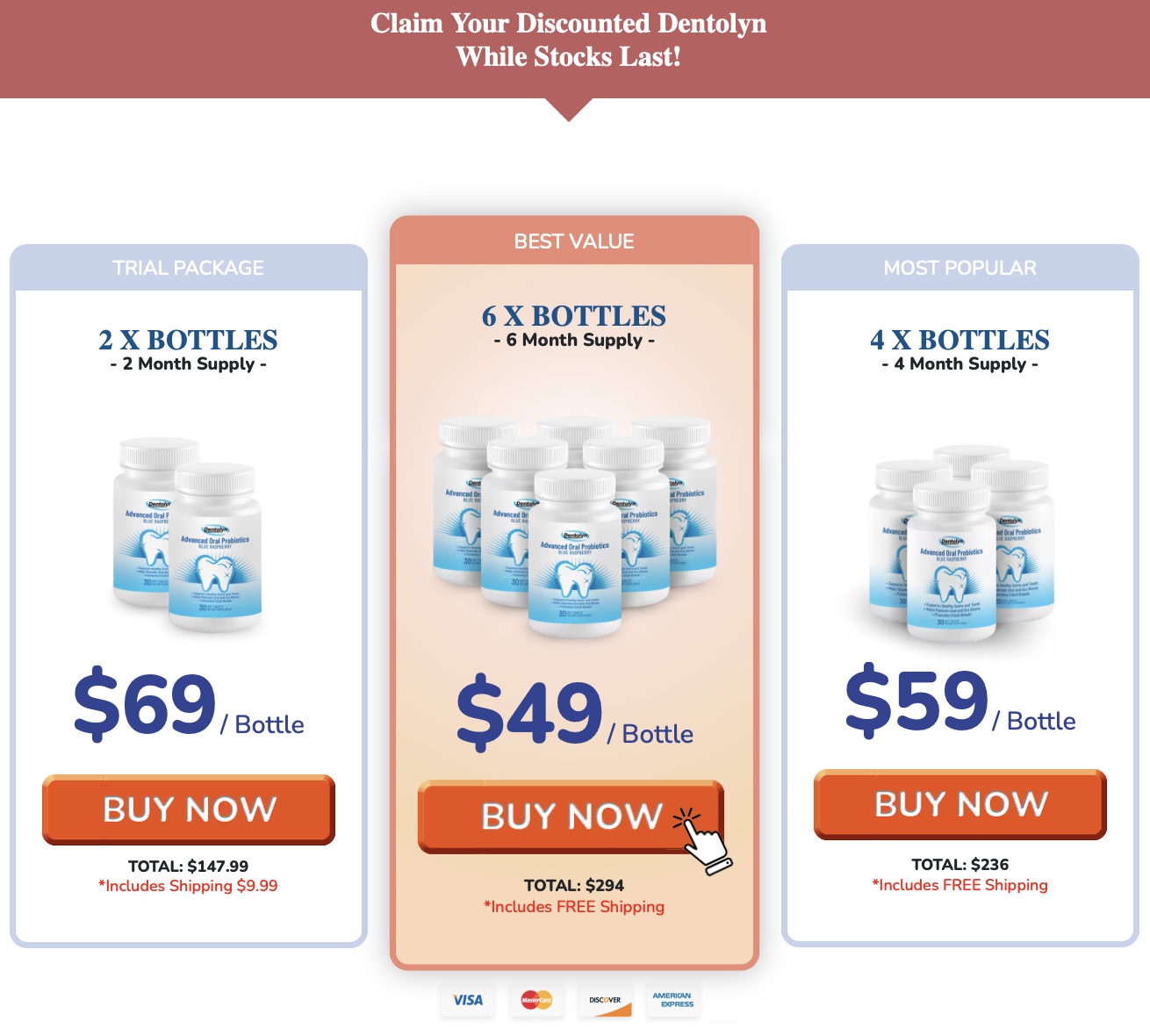
Compare current Dentolyn packages
Ready to compare the current offer?
Only move to package selection after the health, evidence and trust questions are clear.
Frequently Asked Questions
What is a healthy oral microbiome?
It is a diverse oral microbial community functioning within a stable oral environment rather than a bacteria-free mouth.
How can I support my oral microbiome?
Prioritize plaque control, consistent oral hygiene, sensible diet, hydration and appropriate dental care before considering optional supplements.
Does Dentolyn contain probiotic strains?
The currently reviewed formula does not establish named live probiotic strains, so this site does not independently classify Dentolyn as a probiotic.
Can a supplement replace brushing or flossing?
No. Mechanical plaque control remains foundational.
Does xylitol prove Dentolyn improves the microbiome?
No. Xylitol has relevant ingredient-level research, but that does not automatically establish finished-product efficacy for Dentolyn.
What if I have persistent bleeding, pain or swelling?
Persistent or concerning oral symptoms should be professionally assessed rather than managed only through supplementation.